INTRODUCTION
When it comes to building an elite Squat, Bench Press, and Deadlift, most lifters spend all their time analyzing training splits, barbell paths, and gear specifications. They buy the stiffest lifting belts, wrap their knees in premium neoprene, and execute pristine percentage-based programs. However, when it comes to nutrition, they treat their bodies like a regular commercial gym-goer—eating random meals, skipping carbohydrate timing, and guessing their recovery metrics.
Here is the cold, hard truth: Powerlifting is a sport of pure neurological activation and explosive mechanical force production. It is fundamentally different from high-volume bodybuilding or aerobic endurance cardio. A grueling 2-to-3-hour SBD (Squat, Bench, Deadlift) training session places intense demands on your central nervous system (CNS), taxes your connective tissues, and completely drains your internal cellular energy stores.
If you crawl into the gym under-fueled, your central nervous system will misfire, your stabilizing muscles will give out early, and your top-end strength will collapse. This deep-dive, comprehensive guide breaks down the exact metabolic physics, nutrient timing windows, and specific fueling protocols required to maximize your strength output, optimize joint hydration, and accelerate muscle recovery.
Part 1: The Powerlifting Energy System — Why Your Nutrition Needs to Be Different
To understand what to eat before and after a powerlifting workout, you must first understand the primary metabolic engines that drive a heavy barbell lift:
- The Phosphagen (ATP-PCr) System: When you step under a maximal load for a 1-to-3 rep max attempt, your body relies almost entirely on stored Adenosine Triphosphate (ATP) and Phosphocreatine (PCr). This system produces immediate, explosive energy but burns out in less than 10 to 15 seconds. It requires heavy rest periods and a constant supply of cellular energy to replenish.
- The Anaerobic Glycolytic System: When you transition into heavy working sets of 5 to 8 repetitions, your body shifts its demands to the anaerobic breakdown of glycogen (carbohydrates stored directly inside your muscle tissue). If your muscle glycogen levels are low, your bar speed will drop drastically after the second repetition, causing you to fail your sets prematurely.
Because powerlifters train at ultra-high intensities with long resting windows, your nutrition should not be focused on burning fat or achieving a superficial muscle “pump.” Instead, your nutritional framework must focus on maximizing intra-muscular glycogen stores, optimizing cellular hydration, and lowering systemic inflammation.
Part 2: Pre-Workout Nutrition — Setting Up the Platform for Heavy PRs

Your pre-workout nutrition strategy is divided into two distinct execution phases: The Preparation Meal (2 to 3 hours before lifting) and The Immediate Fuel Injection (30 to 45 minutes before stepping onto the platform).
+—————————————————————————————–+
| THE PRE-WORKOUT FUELING TIMELINE |
+—————————————————————————————–+
1. The Preparation Meal (2 to 3 Hours Before the Session)
The goal of this meal is to top off your blood glucose levels and ensure a steady release of energy without causing gastrointestinal (GI) distress.
- The Carbohydrate Architecture: Focus entirely on low-glycemic, complex carbohydrates. Excellent choices include cream of rice, rolled oats, white basmati rice, or sweet potatoes. These foods digest cleanly and supply sustained energy over your long training session.
- The Protein Requirement: Incorporate a clean, fast-digesting lean protein source such as chicken breast, egg whites, or whey protein isolate. Avoid heavy, fatty red meats during this window, as fat delays gastric emptying, leaving food sitting in your stomach.
- The Danger of Fiber and Fat: Do not eat high-fiber foods (like large raw salads or whole grains) or high-fat meals (like fried foods or heavy cheese) before a powerlifting session. When you strap a stiff 10mm or 13mm leather lifting belt tightly around your waist and brace hard, any undigested food or bloating in your gut will cause severe gastric pressure, acid reflux, and structural discomfort that can ruin your squats.
2. The Immediate Fuel Injection (30 to 45 Minutes Before Lifting)
As you prepare to unrack the barbell, you need fast-acting energy that requires minimal digestive effort.
- Simple, High-Glycemic Carbs: Eat easy-to-absorb simple carbohydrates that convert into immediate blood glucose. Excellent real-food options include ripe bananas, white bread with jam, honey, or specialized fast-acting powdered carbs like Highly Branched Cyclic Dextrin mixed into your water.
- The Secret Weapon: Sodium Leverage: Powerlifters should prioritize sodium before a heavy workout. Add 1,000mg to 2,000mg of high-quality salt (about half a teaspoon) to your pre-workout meal or drink. Sodium expands your blood volume, improves intracellular fluid balance, and acts as a natural mechanical cushion inside your joints, protecting your shoulders and knees under crushing weight.
Part 3: Intra-Workout Performance Preservation — Surviving Long SBD Sessions
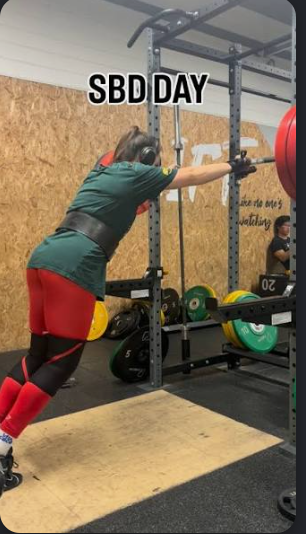
A comprehensive powerlifting workout involving heavy squats, bench presses, and accessory sets often spans 2 to 3 hours. After the 90-minute mark, your performance will naturally begin to decline due to central nervous system fatigue and glycogen depletion.
To prevent an acute power drop, execute an intra-workout hydration and fueling strategy:
- Carbohydrate Sipping: Mix 30g to 50g of a fast-digesting, low-osmolality carbohydrate powder into your water bottle alongside a scoop of Essential Amino Acids (EAAs). Sipping this throughout your session provides a continuous stream of glucose to your working muscles without pulling blood away from your muscles and into your stomach for heavy digestion.
- Electrolyte Replenishment: Intense bracing and heavy lifting cause rapid sweating and mineral depletion. Ensure your intra-workout drink contains adequate amounts of potassium, magnesium, and sodium to maintain proper muscle contractions and prevent debilitating cramps during deep deadlifts.
Part 4: Post-Workout Recovery — Signaling the Muscle Repair Pathway

For years, the fitness industry promoted the mythical “30-minute anabolic window,” claiming that if you didn’t drink a protein shake immediately after dropping the barbell, your workout was completely wasted. While that absolute urgency is false, your post-workout strategy remains vital for transitioning your body out of a destructive, catabolic state and into an anabolic recovery state.
Heavy powerlifting causes severe micro-tears in muscle fibers and structural stress on your tendons. Your post-workout nutrition should focus on two main priorities: Spiking Insulin to Stop Muscle Breakdown and Providing Leucine to Kickstart Muscle Protein Synthesis (MPS).
1. Reversing the Catabolic State with Fast Carbs
When you finish a brutal workout, your body is flooded with the stress hormone cortisol, which breaks down muscle tissue for energy. To halt this process instantly, you need to spike your insulin levels. Eat fast-digesting, simple carbohydrates immediately after training—such as white rice, rice cakes, cereal, or dextrose powder. Insulin acts as a cellular gateway, rushing nutrients out of your bloodstream and directly into depleted muscle cells.
2. Activating the mTOR Pathway with Premium Protein
To rebuild damaged muscle tissue stronger and thicker, you must supply a protein source rich in the amino acid leucine. Leucine acts as a biological ignition switch for the mTOR pathway (the cellular mechanism responsible for building muscle size and strength).
- The Dose: Consume 30g to 50g of high-quality protein within 1 to 2 hours post-workout. Excellent options include whey protein isolate, lean beef, fish, or whole eggs. If you are vegetarian, ensure you combine your protein sources (like rice and lentils) or use a premium plant protein powder to achieve a full, complete amino acid profile.
The Master Powerlifting Daily Fueling Timeline
To help organize your meals seamlessly around your strength routine, follow this comprehensive, step-by-step master timeline matrix:
WHAT TO EAT BEFORE AND AFTER WORKOUT
| Time Window | Meal Category | Primary Nutrient Targets | WRecommended Real-Food Example | Core Performance Objective |
| 2–3 Hours Pre-Workout | The Platform Preparation | Low-Fat Complex Carbs + Lean Protein | Cream of rice or basmati rice with boiled chicken breast or egg whites. | Tops off muscle glycogen stores while ensuring zero stomach bloating or GI distress under a tight lifting belt. |
| 30–45 Mins Pre-Workout | Immediate Fuel Injection | High-Glycemic Simple Carbs + Heavy Sodium | A large ripe banana with 1 tablespoon of honey and 1/2 teaspoon of salt dissolved in water. | Spikes immediate blood glucose levels for explosive power output and loads sodium to mechanically hydrate joints. |
| During Workout (Intra) | Performance Preservation | Fast Carbs + Electrolytes (Sipped) | 35g Cyclic Dextrin powder + Essential Amino Acids (EAAs) + Electrolytes mixed in 1L of water. | Prevents mid-workout power drops, protects bar speed, and wards off severe muscle cramping during long sessions. |
| 0–60 Mins Post-Workout | The Anabolic Gateway | Fast-Digesting Carbs + Fast Protein | A whey protein isolate shake mixed with a scoop of fast dextrose or a bowl of easily digestible breakfast cereal. | Spikes insulin to lower cortisol stress levels, halting muscle breakdown and rushing nutrients into depleted cells. |
| 2–3 Hours Post-Workout | Full System Recovery | Whole Food Macro-Dense Balanced Plate | Lean ground beef or paneer/tofu curry served with a mountain of white rice and mixed grilled vegetables. | Provides long-term sustained amino acids and micronutrients to repair deep muscle tissue and lower joint inflammation overnight. |
3 Critical Nutritional Pitfalls for Powerlifters to Avoid
As you refine your strength nutrition strategy, ensure you do not fall into these common traps that stall your progress:
- Under-eating Carbohydrates Due to Fear of Fat Gain: Many lifters limit their carbohydrate intake because they are afraid of losing their abs. This is a massive mistake for strength sports. Carbohydrates are the primary fuel source for high-intensity lifting. Lowering your carbs will flatten your muscles, destroy your training volume capacity, and cause your top-end strength to plateau.
- Neglecting Hydration Metrics: Your muscles are made of roughly 75% water. A mere 2% drop in total body hydration can cause a massive 10% drop in absolute strength output. Do not just focus on solid food; ensure you drink a minimum of 3.5 to 5 liters of water daily, tracking your fluid intake consistently.
- Over-relying on Stimulants Over Real Calories: Drinking massive doses of high-caffeine pre-workout drinks on an empty stomach is a recipe for long-term central nervous system burnout. Caffeine masks fatigue; it does not provide true cellular energy. Fuel your body with real calories first, and use stimulants sparingly only when attacking maximal efforts.
FRQUENTLY ASKED QUESTIONS(FAQ)
1.What are the best complex carbohydrates powerlifters eat 2 hours before training?
=>Powerlifters heavily prioritize clean, low-glycemic complex carbohydrates that digest smoothly without causing gas or bloating. The most common choices include cream of rice, white basmati rice, rolled oats, and sweet potatoes. These foods ensure a steady, continuous release of blood glucose to fuel a grueling 2-to-3-hour SBD (Squat, Bench, Deadlift) training session without causing a sudden energy crash.
2.What should I eat before and after powerlifting workouts to gain strength?
=>You should prioritize low-fat complex carbohydrates and a high-sodium fast snack. Eat a solid meal of cream of rice or basmati rice with chicken breast 2 to 3 hours out to safely top off your muscle glycogen stores without causing any stomach bloating under a tight lifting belt [Stoic, A7]. You must consume fast-digesting simple carbohydrates and high-leucine protein. Drink a premium whey protein isolate shake alongside fast-acting carbs like rice cakes or cereal within 60 minutes of dropping the barbell. This immediate combination spikes insulin to halt muscle tissue breakdown
3.Should I eat a banana or a rice cake before lifting? Which is better?
=>Both are elite pre-workout snacks, but which one is better depends entirely on how close you are to your training session and how sensitive your stomach is. A banana provides a micronutrient edge with natural potassium, while rice cakes win for pure, rapid carb delivery without adding any heavy volume to your gut before you strap on a tight lifting belt. [1, 2]
1. Why Pre- and Post-Workout Nutrition Matters for Powerlifting
Pre- and post-workout nutrition plays an important role in powerlifting performance, energy levels, and recovery. Powerlifting involves heavy compound movements such as squats, bench presses, and deadlifts, which require strength, focus, and proper recovery. Eating the right foods before and after training can help you fuel demanding workouts and support your long-term strength goals.
Before a workout, your body needs enough energy to perform heavy lifts with proper technique. Carbohydrates provide readily available energy, while protein helps support muscle maintenance and repair. After training, consuming a balanced meal with protein and carbohydrates can help replenish energy stores and support the recovery process.
How Pre-Workout Nutrition Improves Performance
Eating a balanced meal before training can help you maintain energy throughout your workout. Foods rich in carbohydrates, such as oats, bananas, rice, and whole-grain bread, can provide fuel for demanding training sessions. Including a source of protein, such as eggs, yogurt, or chicken, can also help meet your daily protein needs.
The timing and size of your meal matter, too. A larger meal may be more comfortable two to three hours before training, while a small snack may work better closer to your workout. Choose foods that are easy for you to digest and adjust portions according to your training schedule.
How Post-Workout Nutrition Supports Recovery
After a challenging powerlifting session, your muscles need time and nutrients to recover. Protein provides amino acids that support muscle repair and adaptation, while carbohydrates help replenish muscle glycogen used during training.
Good post-workout options include chicken with rice, eggs with whole-grain toast, Greek yogurt with fruit, or tofu with potatoes. You do not need to eat immediately after your final set, but having a balanced meal within a few hours is a practical way to support recovery. Your total daily protein and calorie intake also play a major role in your progress.
2. What to Eat Before a Powerlifting Workout
Choosing the right pre-workout foods can help you feel energised and prepared for heavy lifting. The ideal meal depends on how soon you plan to train, your appetite, and how well you digest different foods. In general, a useful pre-workout meal includes carbohydrates for energy, a moderate amount of protein, and enough fluids to support hydration.
If you have two to three hours before your workout, try a balanced meal such as chicken with rice, oatmeal with Greek yogurt, or eggs with whole-grain toast and fruit. These options provide a combination of carbohydrates and protein without relying on supplements.
If you are training within 30 to 60 minutes, a smaller snack may be more comfortable. A banana, toast with honey, or yogurt with fruit can provide convenient energy without making you feel too full. Experiment with different options during regular training sessions rather than trying unfamiliar foods before a personal-record attempt.
Best Pre-Workout Foods for Powerlifters
Some practical pre-workout food choices include:
- Oatmeal with banana: Provides carbohydrates and is a convenient option before training.
- Rice with chicken: Offers carbohydrates and protein for a more substantial meal.
- Greek yogurt with fruit: Provides protein and carbohydrates in an easy-to-prepare snack.
- Whole-grain toast with eggs: Combines carbohydrates with protein to help meet your nutritional needs.
- Banana with toast and honey: A simple option when you need something light before a workout.
You do not need a special diet to improve your powerlifting performance. Focus on consistent meals, sufficient daily calories, adequate protein, and foods that suit your digestion and preferences.
When to Eat Before Training
For many powerlifters, eating a full meal around two to three hours before training works well. This gives your body time to digest the food while providing energy for the session. If you have less time, choose a smaller, easily digested snack around 30 to 60 minutes before lifting.
Hydration is equally important. Drink fluids throughout the day and have water before and during your workout. Your needs may increase during hot weather or longer training sessions.
Ultimately, the best pre-workout nutrition plan is one that fits your schedule, keeps you comfortable, and helps you train consistently. Adjust meal timing and portions based on your performance, appetite, and recovery.
Conclusion
Building an elite Squat, Bench Press, and Deadlift total requires treating your nutrition with the exact same precision you bring to the barbell. Food is not just fuel; it is a powerful structural tool that alters your leverages, hydrates your joints, manages your neurological fatigue, and dictates your recovery timeline.
Ditch the random eating habits and start executing a calculated fueling protocol. Prioritize low-fat complex carbohydrates 2 hours out to ensure absolute safety and comfort under your heavy leather lifting belt. Load up on simple sugars and sodium 30 minutes before your first warm-up set to maximize your power delivery and cushion your joints. Finally, flood your system with clean, leucine-dense protein and fast-acting carbs after your workout to lock in your strength gains.
By taking charge of your pre and post-workout nutrition splits, you provide your body with the perfect environment to repair, recover, and smash through your lifetime personal records. Pack your meals, track your macros, and go claim your gains!