In the world of strength sports, your total is everything. The “Big Three”—the Squat, Bench Press, and Deadlift (collectively known as SBD)—are the foundational movements of powerlifting. They are the ultimate measures of raw human power and structural force production.
You go to the gym week after week, putting maximum effort under the iron, yet the numbers on the barbell refuse to move.
However structural strength is not built on random intensity; instead it is built on biomechanical precision, strategic programming, and targeted variation. This comprehensive, deep-dive guide breaks down the exact training mechanics, accessory selection, and programming principles required to smash through your plateaus and add serious weight to your squat, bench, and deadlift.
Part 1: The Squat — Building a Bulletproof Leg Drive
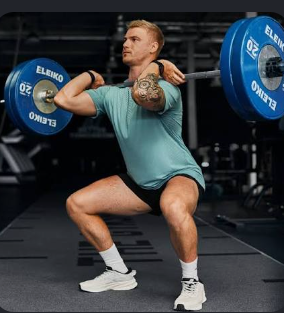
The squat is the king of lower-body development. It requires massive quad power, core stabilization, and absolute structural confidence.
1. Biomechanical Checklist: Fixing Your Base
- Bar Placement: To maximize leverage, transition from a high-bar squat to a low-bar squat. This shifts the mechanical load slightly from your quadriceps onto your glutes and hamstrings, immediately allowing you to squat 5% to 10% more weight.
- Rooting the Feet: Think of your feet as tripods. Your big toe, pinky toe, and heel must remain screwed into the floor throughout the entire movement. Claw the ground with your feet; this creates a natural arch, stabilizing your ankles and preventing your knees from caving inward (knee valgus).
2. The Best Accessory Exercises for Squat Strength
To break through a squat plateau, however target the specific muscle groups that fail first:
- Pause Squats (Targets Bottom Position Power): This is the best variation to grow your squats number, in this variation we do hold in depth position 2-3 seconds and they make your stability and hips mobility and hit your perfect depth in squats.
- Front-loaded squats force your thoracic spine to stay upright under extreme tension.
Part 2: The Bench Press — Maximizing Mechanical Leverage
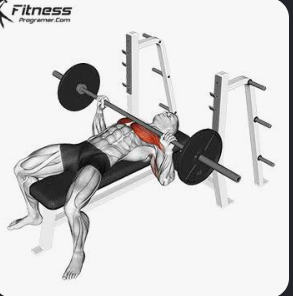
To bench heavy weight, you must stop viewing it as a pure chest exercise and start viewing it as a full-body lift.
1. Biomechanical Checklist: Creating a Rigid Platform
- The Setup: Grip the barbell using your optimal width (a wider grip s This creates a rock-solid, stable platform and protects your rotator cuffs.
- The Arch : It is not an hyperextension of the spine; it is an extension of the thoracic spine. Arching your upper back decreases the total range of motion the bar must travel, although Drive your heels hard into the floor, pushing your body backward against the bench. This leg drive transfers kinetic energy from the floor, through your core, and directly into your chest and triceps as you press the bar.
[ Heels Drive into Floor ] —> [ Force Travels Up Legs & Core ] —> [ Stabilizes Upper Back on Bench ] —> [ Explodes Barbell Upward ]
- Bar Path: First The bar should never travel in a straight vertical line. Lower the barbell down to your lower sternum or upper abdomen. From the bottom position, press the bar back over your face in a slight arc toward the rack. This keeps the bar directly stacked over your wrists and elbows, maximizing structural leverage, as a result you will see perfect arch.
2. The Best Accessory Exercises for Bench Strength
- Larsen Presses (Targets Core & Balance): Perform a bench press with your legs extended straight out in front of you, floating off the floor. This completely eliminates your leg drive, forcing your chest, shoulders, and core to stabilize the weight without any assistance.
- Board Presses or Pin Presses (Targets Lockout Power): Place a board block on your chest or set safety pins in a rack a few inches above your chest. Press heavy loads they improve your lockout issue and build your confidence to do heavy weights and your body will habit to control that weight.
Part 3: The Deadlift — Mastering the Raw Pull
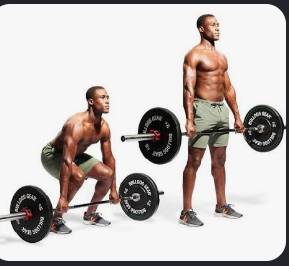
The deadlift is the ultimate test of absolute raw strength. It is a pure battle of leverage between your body and a dead weight resting on the floor.
1. Biomechanical Checklist: Pulling with Zero Slack
- Conventional vs. Sumo: Conventional deadlifts (feet narrow, hands wide) rely heavily on your spinal erectors, hamstrings, and lower back. Sumo deadlifts (feet wide, hands narrow) rely more on your quadriceps, hips, and adductors. Pick the style that matches your limb lengths short torsos and long arms thrive in sumo.
+———————————————————————–+
| THE DEADLIFT SAFETY STEP |
+———————————————————————–+
| 1. Stand with bar over mid-foot. |
| 2. Grab the bar without moving it. |
|
| 4. Lock lats, wedge hips, and push the floor away. |
+———————————————————————–+
- Pushing the Floor Away: Do not think of the deadlift as pulling a bar up with your arms. Keep the barbell scraping directly against your shins and thighs throughout the lift. The higher the rotational strain on your lower back.
2. The Best Accessory Exercises for Deadlift Strength
- Deficit Deadlifts (Targets Speed Off the Floor): Stand on a 1-to-2 inch block or a rubber plate and pull your deadlifts from there. This increase your ROM( range of motion). This helps your this issue and build your strength and after sometimes you are able to hit the big numbers on deadlift.
- Romanian Deadlifts (RDLs) (Targets Posterior Chain): This forces your hamstrings and glutes to handle extreme eccentric tension, which builds a bulletproof lower back.
Part 4: Strength Programming Principles (The Scientific Method)
You cannot build a massive SBD total by running random workouts. To consistently add weight to your lifts without burning out, your programming must incorporate three non-negotiable scientific laws:
1. Progressive Overload (The Foundation)
This does not mean adding 5kg to the bar every single week—that path leads straight to a plateau. Progressive overload can be achieved by:
- Adding small fractional change plates (0.5kg to 1.25kg) to the bar.
- Improving your movement efficiency and bar speed with a heavy load.
2. Managing Fatigue with RPE and RIR
Stop lifting to absolute structural failure on every single set. Going to failure completely fries your Central Nervous System (CNS), requiring days of recovery and ruining the rest of your training week. RPE (Rate of Perceived Exertion) scale or RIR (Reps in Reserve):
- RPE 8 (2 RIR): You finish a heavy set of squats knowing you could have performed exactly 2 more clean reps.
- RPE 9 (1 RIR): You could have ground out exactly 1 more rep.
- Maintain most of your core SBD training sets between RPE 7.5 and RPE 8.5 to balance heavy neurological stimulation with proper muscle recovery.
3. The Power of the Periodic Deload
Every 4 to 6 weeks of intense strength training, your body will accumulate deep fatigue inside your joints, tendons, and nervous system. A deload week is a planned reduction in training volume and intensity designed to clear out this fatigue, allowing your body to repair itself and bounce back stronger.
The Ultimate SBD Strength Progression Matrix
To help organize your training splits, balance your main lifts with their corresponding accessory variations using this structured layout:
| Lift Type | Primary Muscle Targets | Golden Rule for Form | Best Plateau Breaker | Training Frequency |
| Squat | Quads, Glutes, Core | Screw feet into the floor like a tripod; keep knees tracking out. | Pause Squats at the bottom | 1 to 2 times per week |
| Bench Press | Chest, Triceps, Front Delts | Retract shoulder blades back and down; utilize intense leg drive. | Larsen Press (No legs) | 2 to 3 times per week |
| Deadlift | Hamstrings, Glutes, Erector Spinae | Pull the slack out of the bar; push the floor away with your legs. | Deficit Deadlifts | 1 time per week |
FREQUENTLY ASKED QUESTIONS(FAQ)
1.What are the “Big Three” powerlifting lifts known for in strength training?
=>The Big Three—the Squat, Bench Press, and Deadlift (SBD)—are known as the ultimate yardstick for measuring raw, multi-joint human power.
2.Should I do sumo or conventional deadlift for more back strength?
=>If your primary goal is building absolute back strength and spinal erector density, the conventional deadlift is the clear winner.
3.My bench press is stuck at a plateau. What is the very first thing I should check?
=>The first thing you must check is your stability and leg drive. Most lifters treat the bench press as a pure chest movement and leave their legs loose. To break a plateau, screw your feet hard into the floor, pull your shoulder blades tightly back and down into the bench pad, and use your legs to push your body backward against the bench. This transfers kinetic energy from the floor directly into your press, instantly increasing your stability and power output.
Conclusion
Building an elite Squat, Bench Press, and Deadlift is a game of patience, biomechanical consistency, and calculated progression. Strength is a skill; the more efficiently you move your body around the barbell, the heavier the loads you will safely lift.
Stop chasing random gym fatigue and start chasing execution quality. Master your foot rooting on the squat, lock down your thoracic arch and leg drive on the bench press, and pull the slack out of the barbell on every single deadlift. Combined with structured accessory work to eliminate your weak points and a methodical approach to fatigue management, your plateaus will shatter. Stay consistent, execute with precision, and watch your SBD total scale to heights you never thought possible.