INTRODUCTION
In powerlifting, progress is measured by a single metric: the weight on the barbell. When you are an absolute beginner, adding weight to your Squat, Bench Press, and Deadlift (SBD) feels effortless. Your body adapts rapidly to the new stimulus, and personal records (PRs) fall almost every single week. 7 training mistake that limit your powerlifting progress
However, as you transition into an intermediate lifter, progress slows down. Suddenly, the weights feel heavier, your joints start to ache, and your numbers hit an unyielding plateau.
When powerlifting progress stalls, most lifters make the mistake of assuming they just need to “train harder.” They walk into the gym, crank up their pre-workout stimulants, grind out reps to absolute muscular failure, and push through sharp joint pain.
This approach is a fast track to injury and central nervous system burnout. True strength progression is an exact science. If your SBD total has stopped moving, it is almost always due to specific, hidden flaws in your training execution.
This deep-dive guide breaks down the 7 worst powerlifting training mistakes that limit your strength progression and explains exactly how to fix them using proven biomechanical and programming principles.
THERE ARE 4 TYPES OF NERVOUS SYSTEM
1. Chronic Central Nervous System (CNS) Burnout

The most common mistake among intermediate powerlifters is testing their 1-Rep Maximum (1RM) far too frequently. There is a massive structural difference between building strength and testing strength.
The Science Behind the Mistake:
Skeletal muscle tissue recovers relatively fast (usually within 48 to 72 hours). However, moving maximum loads (90%+ of your 1RM) places a monumental tax on your Central Nervous System (CNS). Heavy lifting forces your brain to fire high-frequency electrical signals to recruit maximum motor units. Grinding maximal loads to absolute failure week after week fries these neural pathways. You will experience persistent lethargy, joint stiffness, and a sharp drop in barbell velocity—even if you feel highly motivated.
How to Fix It:
Stop testing your max weights outside of a competition or the end of a structured training macrocycle. Build your strength using the RPE (Rate of Perceived Exertion) 7.5 to 8.5 framework. Train with weights where you consistently leave 1 to 2 clean repetitions in reserve (RIR). This stimulates maximum structural hypertrophy and neural adaptation without causing systemic exhaustion.
2. Ignoring Kinetic Energy Bleeds (Poor Biomechanical Tightness)
Strength is a product of force transfer. If your body is loose or unbraced during a lift, the kinetic energy you generate against the floor will bleed out before it ever reaches the barbell.
The Science Behind the Mistake:
Consider the bench press. Many lifters treat it as a pure chest exercise, keeping their legs loose and their shoulder blades flat against the pad. When you press the bar, your torso flexes, your shoulders shift forward, and the mechanical leverage collapses. The same issue occurs during a squat when a lifter’s ankles cave inward or their lower back rounds into a “butt wink.” Every millimeter of unnecessary structural movement is an energy leak that robs you of raw power.
[ Loose, Unbraced Body Setup ] —> [ Muscle Generates Force ] —> [ Energy Bleeds Through Wobbling Joints ] —> [ Weak Barbell Drive ]
How to Fix It:
Treat setup tightness as a skill. On the bench press, pull your shoulder blades tightly back and down to create an unyielding platform, and drive your heels hard into the floor to utilize leg drive. On the squat and deadlift, screw your feet into the floor like tripods to stabilize your ankles, lock your lats completely, and create a perfectly rigid torso before initiating the movement.
3. Short-Changing Your Rest Intervals Between Heavy Sets
Many lifters carry a “bodybuilding” or “cardio” mindset into their powerlifting sessions, rushing into their next heavy set after only 60 to 90 seconds of rest to keep their heart rate elevated.
The Science Behind the Mistake:
High-intensity, low-repetition powerlifting relies almost exclusively on the Phosphagen (ATP-PCr) energy system. This cellular system produces massive, immediate explosive power but has a highly limited capacity. It takes approximately 3 to 5 minutes of complete rest for your cells to replenish 95% to 100% of their Adenosine Triphosphate and Phosphocreatine stores. Rushing your sets means you are stepping under a heavy barbell with an under-fueled engine, causing artificial performance drops and compromised mechanical execution.
How to Fix It:
Put your phone down, step away from the barbell, and use a timer. When training at intensities above 80% of your 1RM, force yourself to rest a minimum of 3 to 5 full minutes between working sets. Your goal is to maximize force production on every single repetition, which requires complete cellular recovery.
4. Failing to Pull the “Slack” Out of the Barbell
During the deadlift, many lifters walk up to the bar, bend over, and immediately yank the barbell off the floor with maximum speed.
The Science Behind the Mistake:
When you yank a heavy barbell from a dead stop, your hips shoot up instantly before the weight even leaves the floor. This completely alters your mechanical moment arms, stripping your legs of their leverage and shifting 100% of the load directly onto your lower back and spinal erectors. This “cat-backed” pulling mechanics limits your top-end strength and places dangerous, uneven shearing forces on your lumbar vertebrae.
How to Fix It:
Before you attempt to lift the weight off the floor, you must pull the slack out of the bar. Grip the barbell and pull upward with about 10% to 20% of your force until you hear a distinct metal-on-metal “click” sound as the bar hits the inner rings of the weight plates. At the exact same micro-second, wedge your hips into place, pull your chest up proudly, and engage your lats as if trying to crush oranges in your armpits. Only when your body is completely locked and tensioned should you push the floor away to start the pull.
5. Misunderstanding the Valsalva Bracing Technique
Many lifters attempt to execute a heavy lift by simply holding their breath in their mouth, puffing out their cheeks, and tensing their neck muscles while keeping their ribcage flared upward.
The Science Behind the Mistake:
Holding air in your upper throat does absolutely nothing to protect your spine. True powerlifting safety and power require the Valsalva Maneuver. You must draw a massive breath deep down into your diaphragm/abdomen, and then attempt to exhale forcefully against a closed airway. This creates massive Intra-Abdominal Pressure (IAP). If your ribcage is flared upward or you only tense your upper chest, your lower core remains soft, leaving your lumbar spine vulnerable to buckling under load.
+———————————————————————–+
| THE VALSALVA BRACING STEP |
+———————————————————————–+
| 1. Pull your ribcage down to stack it perfectly over your pelvis. |
| 2. Take a deep, 360-degree belly breath (expand sides and back). |
| 3. Contract your abs hard outward as if preparing to get punched. |
| 4. Bite down, execute the lift, and exhale only past the sticking pt. |
+———————————————————————–+
How to Fix It:

Wear your 10mm or 13mm leather lifting belt and practice pushing your entire core outward against the leather in all directions (front, sides, and lower back). Keep your spine neutral and your ribs pulled down, stacking your thoracic cylinder perfectly on top of your pelvic bowl. This creates an airtight, unyielding core column.
6. Accumulating Unproductive “Junk Volume”
After hitting their primary compound competition lifts, many intermediate lifters spend an additional 45 to 60 minutes chasing a muscle “pump” using various isolation machines, cable flyes, leg extensions, and high-rep arm variations.
The Science Behind the Mistake:
In powerlifting, non-specific high-repetition isolation work that creates localized muscular fatigue without contributing to specific neural or mechanical adaptations for your SBD total is classified as junk volume. It creates massive amounts of cellular waste products and muscle damage that your body must spend vital energy repairing. This completely eats into your limited systemic recovery budget, leaving you under-recovered and weak for your next heavy barbell session.
How to Fix It:
Keep your accessory work strictly specific and minimal. Every accessory exercise you select must serve a direct purpose to fix a specific weakness in your main lifts. If your squat lockout is weak, perform pause squats. If your triceps give out on the bench press, perform close-grip benches or floor presses. Eliminate non-essential fluff exercises and leave the gym as soon as your main objectives are met.
7. Skipping Scheduled Deload Weeks
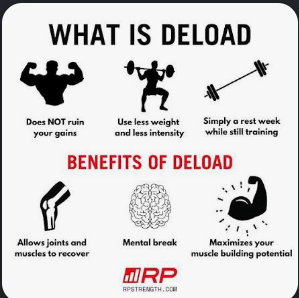
Many hardcore lifters view a deload week as a sign of weakness or a waste of training time, believing that taking a break will cause them to lose their hard-earned muscle size and strength.
The Science Behind the Mistake:
This error violates the core sports-science law of the Fitness-Fatigue Model. As you train intensely over a 4-to-6-week cycle, your body builds fitness, but it also accumulates massive, deep systemic fatigue within your tendons, ligaments, bones, and nervous system. Fatigue masks your true strength. If you never clear out this accumulated fatigue, your performance will drop, your movements will degrade, and you will eventually face chronic overuse injuries like patellar tendonitis or shoulder impingement.
| PLANNED DELOAD: Fatigue Drops Fast ▼ —> Latent Strength Unmasked |
+———————-————————————————-+
How to Fix It:
Schedule a strategic deload week every 5 to 7 weeks of consistent, heavy training. During this week, do not stay completely off the gym; instead, lower your total training sets by 50% and reduce the weights on the bar by 20% to 30%. This allows your systemic tissues to fully repair and adapt, unmasking your latent strength gains so you can return to the next cycle stronger than ever before.
Summary: The Powerlifting Mistake Correction Matrix
Use this quick structural matrix to review your current routine and immediately optimize your training variables:
| Training Mistake | Root Physiological Cause | Real-World Symptom | Immediate Training Fix |
| Max Testing Weekly | Central Nervous System (CNS) exhaustion. | Decreasing bar speed; joint stiffness; persistent lethargy. | Train primarily at RPE 7.5–8.5; leave 1–2 reps in reserve. |
| Loose Setup | Kinetic energy bleeds through loose links. | Shaking mid-lift; shoulders shifting forward on bench press. | Pull shoulder blades back/down; utilize intense leg drive. |
| Short Rest Intervals | Under-replenished Phosphagen (ATP-PCr) stores. | Sudden strength failure after the 2nd or 3rd rep. | Rest a full 3 to 5 minutes between heavy working sets. |
| Yanking the Deadlift | Sudden leverage collapse off the floor. | Hips shooting up early; extreme lower back rounding. | Pull the slack out of the barbell until it clicks before lifting. |
| Fluff Isolation Work | Accumulation of counterproductive junk volume. | Chronic under-recovery; lack of specific strength carryover. | Eliminate non-specific pump exercises; focus on direct weak points. |
FREQUENTLY ASKED QUESTIONS(FAQ)
1. How do I know if my hips are “shooting up” too fast during a deadlift?
=>You can easily identify this by recording a side-profile video of your heavy sets. If your knees straighten out and your hips rise upward before the barbell even breaks off the floor, your hips are shooting up early. This happens because you are yanking the bar instead of pulling the slack out. It instantly turns the deadlift into a “stiff-legged” pull, placing the entire mechanical load dangerously on your lower back.
Q2. Does practicing the Valsalva maneuver increase my blood pressure dangerously?
=>The Valsalva maneuver does cause a temporary spike in acute blood pressure while you are actively bracing under a heavy load, which is a normal physiological response to structural lifting. However, for healthy individuals with no pre-existing cardiovascular conditions, this temporary spike is completely safe and necessary to create the internal abdominal pressure required to protect your spine. If you experience severe dizziness, make sure you are pushing the air down into your belly, not into your head or face.
Q3. During a deload week, will I lose my strength or muscle mass if I drop the weights?
=>No, it is physiologically impossible to lose hard-earned muscle mass or neural strength in just 7 days of reduced training. It takes roughly 2 to 3 weeks of complete physical inactivity for muscle atrophy to begin. A deload week does not weaken you; instead, it lowers your systemic fatigue, allowing your tendons and joints to fully repair. You will actually return to the gym the following week feeling significantly stronger and more explosive.
Conclusion
Breaking through an intermediate powerlifting plateau requires moving away from emotional, intensity-driven training and moving toward precise, calculated execution. Strength is a neurological skill just as much as it is a muscular attribute.
Stop treating every gym session as a test of your absolute limitations. Guard your central nervous system by keeping your working weights structured, prioritize complete 3-to-5-minute rest intervals to fuel your ATP engine, lock down your mechanical tightness to eliminate kinetic energy leaks, and embrace scheduled deload weeks to let your body repair its foundations. By eliminating these 7 critical mistakes from your routine, you provide your body with the perfect structural environment to consistently add weight to the barbell and achieve lifelong strength progression.